 Sample EME 2040 Teaching with Instructional Technology Syllabus
Sample EME 2040 Teaching with Instructional Technology Syllabus
EME-2040 Intro to Educational Technology BACA 214 Monday 9:30-10:45 01/12/04-5/10/2004 Professor: Mrs. Dianne E. Haun
|
Schedule appointments by |
PHaun@hccfl.edu |
Or call 253-7808 |
|
Send assignments to |
pennyhaun@aol.com |
Label EME AM in subject |
|
Office: BTEC 112 A |
Phone: (813) 253-7832 |
Hours: By Appointment |
SCHEDULED Office Hours:
PREREQUISITES: None
 Course
Description:
Course
Description:Introduction to technology for educators, including classroom management tools, multimedia, communication networks, interactivity, educational software and legal, ethical and social issues.

Required Text: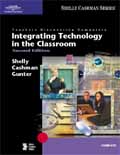
Shelly, Cashman. 2003.Integrating Technology "Teachers Discovering Computers: a
Link to the Future."
This text can be purchased at the campus bookstore, or through common
Internet-based bookstores. Teacher’s Discovering Computers: A Link to the
Future
Course Website:
http://www.scsite.com/tdc2/
AND
REQUIRED: Personal email. If you don't have this, apply to hotmail, geocities or other free email service. Lab TECs in the computer lab can help you accomplish this.
AND
REQUIRED: Personal journal, daybook or diary for recording thoughts about classroom visitations and other educational related issues
AND
REQUIRED: Two large sized Blue Book exams available at the book store for 25 cents each.
OPTIONAL: Personal teaching philosophies website, camera for recording interviews, classroom visits…..
Course Overview:
This course is intended for beginning teachers. It is one of the required courses specified by the Florida Board of Regents. Through this course you will become accustomed to using technology-based tools and techniques as you design and develop curricular materials.
Course Goals and Outcomes:
As a part of participating in EME 2040, being exposed to multiple forms of media and teaching techniques, softwares and methodology, the following objectives will be addressed within the course instruction and through the completion of assignments.
Personal Hands-On Skills to
demonstrate:
Word processing skills
Presentation skills
Spreadsheet skills
Database skills
Graphics skills
Web skills
Use of internet tools
Information searching skills
Knowledge of Integration of Computers into the Curriculum:
1.
Explain the difference between instruction
and construction approach to learning.
2. Describe the five stages of instructional evolution.
3. Describe the issues related to managing a technology-rich classroom.
4. Describe the roles of teachers and students in a student led classroom.
5. Describe the advantages and disadvantages of student engagement.
6. Describe conditions for creating enduring student engagement.
7. Describe the relationship between instructional innovation and collegial
sharing.
8. Describe the components of the Lesson Plan.
9. Describe the components of effective staff development.
10. Describe some barriers to change, and what is required to effect
instructional change.
11. Describe the benefits of technology integration.
12. Describe two examples of classroom applications using word processing.
13. Describe two reasons why presentation software is better than plastic
transparencies.
14. Describe four ways spreadsheets could be used in the classroom.
15. Describe three benefits of electronic data management (database).
16. Explain the parts of a URL.
The Student will develop skills :
To write clear and concise analyses and evaluations of educational materials.
To use technological resources to facilitate communication links among educational institutions, home, and community.
To use technology to facilitate a supportive learning environment.
To identify, analyze, and critique the specific learning/cognitive strategies used in instructional technology programs (e.g., software, laser disc units, etc.)
To examine the uses of technology appropriate to various conceptions of curriculum.
To use computers for (a) designing, developing, and administering tests; (b) scoring and analyzing tests; and (c) managing and communicating learner progress.
To use analysis and other technologies for identifying, organizing, and synthesizing information and skills across disciplines.
To apply technology to the management and evaluation of instruction.
To manage a multi-instructional milieu (e.g., learning centers, peer-tutoring, large, and small group instruction).
To locate and use developmentally appropriate materials incorporating a variety of print media and technology.
To use technological resources to tailor educational experiences and programs to meet individual student needs.
To make ethical decisions in the implementation of technological resources.
To generate unit and lesson plans for a contemporary curriculum in the specialty area.
To adapt curriculum materials in order to present real-world scenarios for the students.
To design learning experiences that help students draw relationships and make connections among different content areas.
Upon successful completion of this course, students will be able to:
|
Team 1 Presentation (Media, Technology, and Learning) Introduction to Using Computers in Education |
|
|
Team 2 Presentation Multimedia Team Presentation (The Assure Model) (Technologies for Learning) Education and Technology Integration |
|
|
Team 3 Technology Tools Team Presentation (Media, and Materials) Software Applications in Education |
|
|
Team 4 Integrating Technology into the Curriculum (Visual Principles) Using Multimedia in Education |
|
|
Team 5 Audio |
|
|
Team 6 Video |
|
|
Team 7 Security and Emerging Technologies Security Issues, Ethics, and Emerging Technologies in Education |
|
|
Team 8 Ergonomics and Hardware Hardware Applications in Education |
|
|
Team 9 The role of technology in Society |
|
|
Team 10 Ecommerce and the Web |
|
|
Team 11 The role of Technology in school and impact on teaching, Integrating Educational Technology into the Curriculum |
|
|
Team 12 (Intranets and Internet) The role of technology in communicating with parents and community in shaping education
|
|
|
Team 13 Distance Learning, Active Learning Online |
A portfolio is “more than a compilation of student papers or materials stuffed into a manila folder or a collection of memorabilia pasted into a scrapbook. To qualify as a portfolio, each piece of evidence must be collected or created and organized in a compelling manner to demonstrate proficiency in or progress toward a purpose”. (Barton & Collins, 1993, p.204).
In other words, you collect evidence throughout the semester, but at the end of the semester you decide what to include which will show what you have learned and how you have learned it. Much of the evidence you will collect will be responses to assignments you have completed for me (and for other instructors) throughout this semester. The skill involved in the portfolio is organizing the evidence to demonstrate personal growth in the learning.
A Portfolio has a Focus!
The focus for the portfolio developed in this course is for you to show your evolving knowledge of how students can successfully learn concepts. Thus the portfolio will:
(i) provide a forum for you to demonstrate your emerging understanding of the complexities of teaching;
(ii) help you link the theoretical with the world of practice. Additionally, by completing this portfolio yourself, you will have a heightened awareness of the complexities involved in assessing learning by this means which will help you to use portfolios in your own teaching.
How will you demonstrate your learning?
Remember that at the end of the semester you will sit down with all the evidence you have collected throughout the semester and you will use your portfolio to demonstrate your initial understanding of how students learn, what education is and how this understanding has evolved throughout the semester. You may have gathered evidence from such sources as: discussions with peers, teachers, methods instructor, students, assignments which explore student learning (e.g. readings, interviews, lesson plans), observation of classroom teaching and video tapes, and other classroom experience.
Examples of Portfolios and Types of Evidence from the Research Literature (some examples taken from Barton, J. & Collins, A (1993). Portfolios in teacher education. Journal of Teacher Education, 33(3), 200-210.
Types of Evidence
Evidence Explanation Examples
Artifacts documents produced during a written paper, a note-
the normal course work in book of field notes, video-
the program tape of peer teaching
Reproductions documents about events in audio tape of a discussion
the work of students with a classroom teacher
Attestations documents about the work of written comments from
the student prepared by some- an instructor, newspaper
one other than the student article
about the student
...”although the word document, as a synonym for evidence, often conjures up the image of paper, the documents in a teacher education portfolio are not limited to formal paper. Students can use notes, drafts, journals, and diary entries, and sketches as well as drawings, photographs, audio tapes, video tapes, models and computer discs.” Note: Any audio or video recording of children made in a school, must be done with the consent of the principal and must follow the school’s specified guidelines for such activities.
Examples of Portfolios
• Portfolio Focus: middle-school-aged children...
the student teacher included audio tapes of student interview, several articles from different journals, note from her observations in middle schools...(also appropriate might be a paper written on the development of the middle school child completed for the Developmental Pysch. course).
• Portfolio Focus: determining the criteria for quality laboratory work in science...
the student teacher interviewed two experienced teachers about how they defined the key components of good laboratory experiences. He observed labs in each of these teacher’s classrooms and compared the experience to his own criteria for lab experiences and designed and conducted a lab during his early field experience. He completed his portfolio with a reflection on what he had learned about the essential elements and putting theory into practice.
• Portfolio Focus: Two students wanted to learn more about technology for instruction. Eventually they taught themselves Hypercard and presented their portfolio as a stack.
• Portfolio Focus: A student in an Intro to Education Course wishes to convey his/her knowledge of how their understanding of educational technology will enable them to be successful as a teacher and facilitate student learning and inquiry habits of mind. This is your focus! How will you demonstrate your learning?
Organizing your Portfolio for Submission
1. Submit the evidence which clearly shows the evolution of your knowledge of how students learn science concepts. Each piece of evidence must be captioned. A caption is a statement attached to each piece of evidence which describes why it is included, what it is evidence of.
2. At the end of the portfolio include a reflective statement - written as you review your own portfolio and organize it. You will summarize the documents included and “trace how they have captured and portray growth”.
3) Include a table of contents with two columns, with columns 1 and 2 completed .
Evidence Included Reason for Inclusion
An Example of Assessment of a Portfolio or
Questions Concerning the Substance of the Portfolio:
1. Has the student met the stated purpose? If no, what is missing?
2. Does each piece of evidence meet its intended purpose?
3. Is the evidence organized in such a way that it helps to demonstrate the student’s
growing knowledge?
4. Is there evidence that the student has sought connections between theory and
practice?
5. Is there evidence of analysis, synthesis, and evaluation; creativity; reflection?
6. Are all of the objectives of the course documentable through this portfolio?
Suggestions for Completing the Portfolio:
Start Now! (Day 1)
Ask Questions!
Think Creatively!
1. Create an individual World Wide Web home page. Specific requirements for the home page will be provided in class.
2. Create an Informational Letter to parents merged to a database of parents.
3. Create a presentation using PowerPoint.
4. Create an instructional Hyperstudio or branching PowerPoint program.
5. Evaluate Web sites and software that you might use in a lesson in your selected teaching area
6. Prepare a lesson plan that integrates technology into the curriculum.
Chapter and Website Reflections: (More details will be provided in class )
Personal reflections are required. These reflections will reference textbook chapters and their related Websites. Use a spell checker and carefully proofread your work. Reflections may be written in the first person.
Attendance is crucial in this course; thus the instructor reserves the option to lower the final letter grade for unexcused absences which exceed two weeks for the semester, early departures or for repeated late arrivals. An excused absence must be arranged with the instructor before the class which the student is not going to attend. In an emergency, a message should be left with the secretary at 813-253-7808. Participation in class activities are required for accomplishing grades C and higher. Since this is an introductory class, all efforts toward participation will be rewarded. Thorough reading of the text prior to class meetings is expected and will enhance your ability to participate fully in class activities. Rereading the text after class will help you prepare for presentations.
"I" (Incomplete grade) POLICY
Students sometimes fail to progress in courses because adequate prerequisite skills are not possessed or because adequate time management and study skills are not exercised. These are NOT appropriate bases for the issuance of an "Incomplete" grade. No "I" grades will be awarded in this course without extenuating, documented circumstances, such as death in the family or extended illness. If you should happen to arrive in such unfortunate circumstances, be sure to provide suitable documentation when you approach me about the "I". Two Thirds of the course must be completed in order to be eligible for the “I” according to HCC policy. Your "I" will buy you one more semester in which to finish your work. If you haven't earned a higher grade by that time, your grade will convert permanently to an "F" and there will be no way to complete the course. If you wish at that point to continue, you will have to start anew by re-registering (and re-paying) for the course.
DISABLED STUDENTS & RELIGIOUS HOLIDAYS:
Please notify the instructor within the first week if a reasonable accommodation for a disability is needed for this course. A letter from the Office of Student Disability Services must accompany the request. Additional resource information is available through the Graduate Student Handbook. Students who anticipate the necessity of being absent from class due to the observation of a major religious observance must provide notice of the date(s) to the instructor, in writing, by the second class meeting.
Spring 2004 SESSION 16 WEEK COURSE SCHEDULE/CONTENT OUTLINE
|
WEEK |
TOPIC |
READING IN TEXT |
DUE |
|
1 (01/12/04) |
Introduction to Technology |
Syllabus review |
|
|
2 (01/14/04) |
Introduction to Computers, Team assignments |
Read Chapter 1, Powerpoint http://www.scsite.com/tdc/ (WebINFO) |
|
|
3 (01/19/04) |
No Class |
Holiday |
|
|
4 (01/21/04) |
Communication, Networks, WWW, Internet, Meet w/teams |
Read Chapter 2 |
Best and Worst |
|
5 (01/26/04) |
Team A Presentation (Media, Technology, and Learning) |
Read Chapter 3, http://www.scsite.com/tdc/(CyberClass) |
Ten Commandments |
|
6 (01/28/04) |
Hardware, Team B Presentation(Technologies for Learning) |
Read Chapter 4 |
|
|
7 (02/02/04) |
Multimedia Team C Presentation(The Assure Model) |
Read Chapter 5, http://www.scsite.com/tdc/(TeacherTime) |
Bookbag |
|
8 (02/04/04) |
Technology Tools Team D Presentation (Media, and Materials) |
Read Chapter 6, http://www.scsite.com/tdc/(Checkpoint) |
|
|
9 (02/09/04) |
Integrating Technology into the Curriculum Team E, Presentation, (Visual Principles) |
Read Chapter 7 |
Learning Center |
|
10 (02/11/04) |
Security and Emerging Technologies, Team F Presentation, (Visuals) Team G Presentation, (Audio) Team H Presentation, (Video) |
Read Chapter 8, http://www.scsite.com/tdc/(Edissues) |
|
|
11 (02/16/04) |
President’s Day |
No Class |
|
|
12 (02/18/04) |
Team I Presentation(Computers) |
Webliography |
Website Reviews
|
|
13 (02/23/04) |
The role of technology in society, Team J Presentation(Multimedia) |
|
|
|
14 (02/25/04) |
The role of Technology in school and impact on teaching, Team K Presentation(Intranets and Internet) |
Webquest |
|
|
15 (03/01/04) |
The role of technology in communicating with parents and community in shaping education, Team L Presentation(Distance Learning and the Future) |
http://www.scsite.com/tdc/(NetStuff) |
|
|
3/8/04 |
Spring Break |
No Class |
Holiday |
|
16 (03/16/04) |
Technology and Tracking |
AR, STAR and FCAT |
|
|
17 (03/18/04) |
Software for Learning |
Hyperstudio |
Software review |
|
19 (03/23/04) |
Active Learning |
Discussion |
|
|
20 (03/25/04) |
Active Learning |
Lesson Planning |
|
|
21 (03/29/04) |
Audio Presentations |
Teaching with Audio |
Audio Pres. |
|
22 (03/31/04) |
Audio Presentations |
Teaching with Audio |
Audio Pres. |
|
23 (04/5/04) |
Video Presentations |
Teaching with Video |
Video Pres. |
|
24 (04/7/04) |
Video Presentations |
Teaching with Video |
Video Pres. |
|
25 (04/12/04) |
Discuss Business Use of technology |
School to Work Initiative |
Business Field trip Due |
|
26 (04/14/04) |
Bulletin Boards |
Non projected Media |
|
|
27 (04/19/04) |
Discuss School Observations |
Technology in Current Use |
School Obs. |
|
28 (04/21/04) |
Grade books |
Technology Assessment Tools |
|
|
29 (04/26/04) |
Workshop/Submit Portfolio |
Sign up for Portfolio Presentation |
Portfolio Due |
|
30 (04/28/04) |
Portfolio Presentations |
|
|
|
31 (05/3/04) |
Portfolio Presentations |
|
|
|
32 (05/5/04) |
Portfolio Presentations |
Pick up Graded Portfolios |
|
*Absolute deadline for late submission of any Assignments
Professional Conduct: Read assignments and display vigorous (and meaningful) positive participation in all class lessons and activities (hence attendance is required, but it is my sincere wish that you will also want to come to class). Group presentations of readings will be assigned in class and points awarded for this task.
Personal meetings with your instructional staff.
If you need help in any way with this course, first contact the professor via the course email listed at the top of this document. You should, of course, frequently access the assistance of your team members, read the course text and attend all classes. Individual and team help cannot replace class meetings, but rather are an assistance to supplement class attendance and careful study. Your success is highly valued. Education needs bright and talented teachers.
WE NEED YOU TO SUCCEED. OUR FUTURE DEPENDS UPON YOU!